



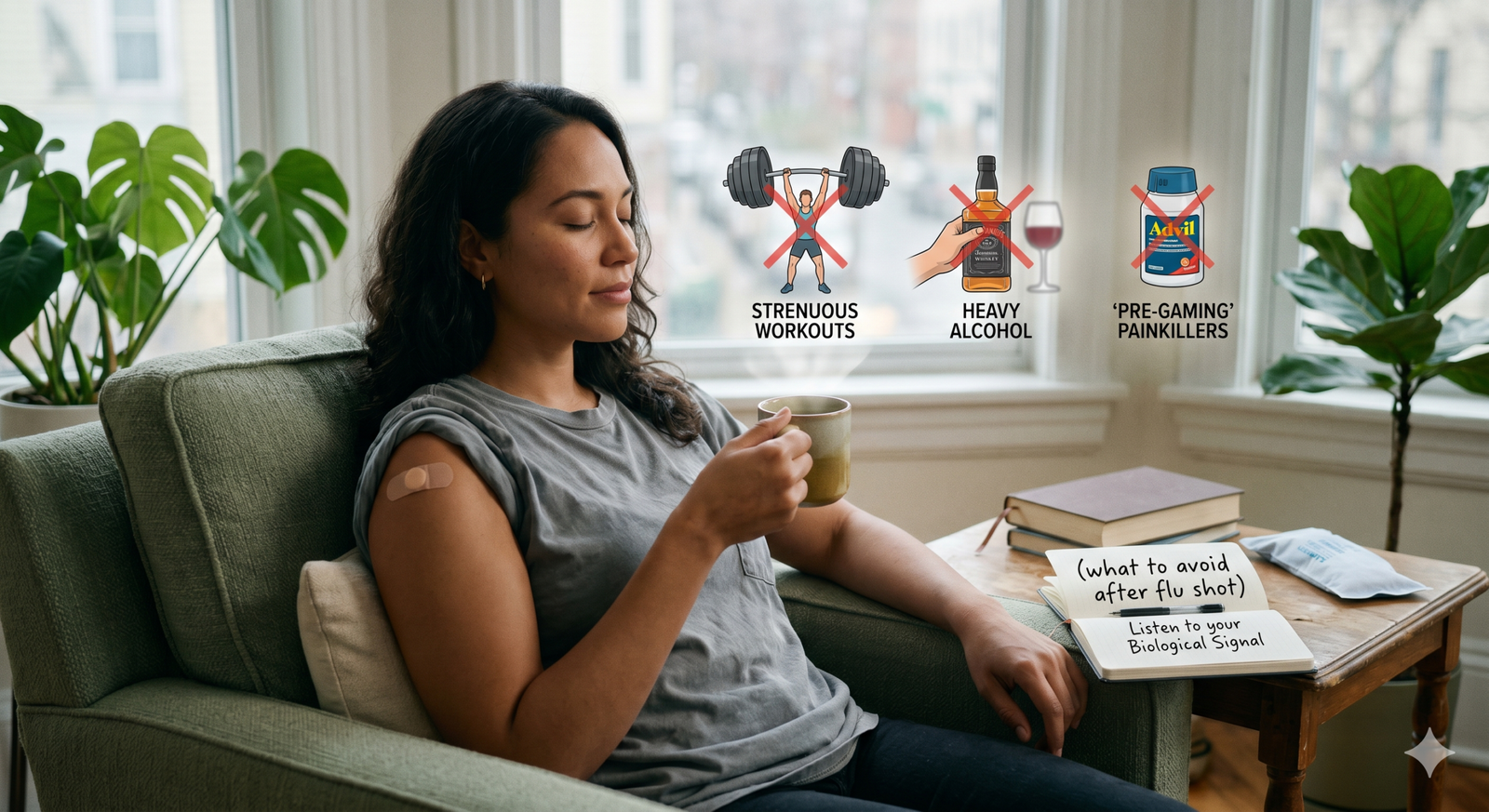
It is officially that time of year again. In the late spring of 2026, as we transition between seasons, the annual tradition of the flu shot remains one of our best defenses against a virus that—despite all our technological advances—still manages to be a persistent nuisance. You’ve done the responsible thing: you made the appointment, braved the needle, and now you’re wearing that tiny round bandage like a badge of honor.
However, the journey doesn’t end the second the nurse disposes of the syringe. While the vaccine is busy introducing itself to your immune system, your body enters a period of heightened activity. To ensure that your body builds the strongest possible defense, there are several “dos and don’ts” to keep in mind. If you’ve been searching for what to avoid after a flu shot, you aren’t just looking for safety tips; you’re looking to maximize your biological ROI.
Here is the 2026 human-centric guide to post-vaccination care.
Avoid Strenuous “Max-Effort” Workouts
We all love the “no days off” mentality, but the 24 hours following your flu shot are a great time to lean into a “rest day.” While light movement—like a brisk walk or some gentle stretching—is actually encouraged because it helps blood flow and can reduce arm soreness, you should avoid heavy weightlifting or high-intensity interval training (HIIT).
Why? Intense exercise causes systemic inflammation and physical stress. Your immune system is currently occupied with the “training exercise” of the vaccine. If you hit a personal best on the bench press or run a marathon immediately after, you’re forcing your body to split its resources between muscle repair and immune response. Furthermore, heavy lifting with the arm that received the shot can lead to increased swelling and localized pain. Give it a day. Your gains will still be there tomorrow.
Avoid Heavy Alcohol Consumption
There is a common myth that a single glass of wine will “kill” the vaccine. That’s not true. However, binging or heavy drinking is a definite “avoid.”
Alcohol is a known immunosuppressant. It can also cause dehydration and disrupt your sleep patterns—two things your body desperately needs to stay in top shape while processing the vaccine. Additionally, if you happen to experience common side effects like a low-grade fever or aches, alcohol can amplify those feelings, making you feel significantly worse than necessary. Stick to water, herbal tea, or an electrolyte-rich drink for the first 24 to 48 hours.
Avoid “Pre-Gaming” with Painkillers
This is a tip that often surprises people. Many think taking ibuprofen (Advil) or acetaminophen (Tylenol) before or immediately after the shot will prevent soreness. Medical consensus in 2026 suggests you should avoid taking these as a preventative measure.
Why? Anti-inflammatory medications work by, well, reducing inflammation. But the vaccine works by creating a small, controlled amount of inflammation to signal your immune system to pay attention. There is some evidence that taking these medications too early can slightly dampen the initial immune response.
The “Malin” Play: If you actually start feeling significant discomfort or a fever a few hours later, then by all means, take the medication. Just don’t take it “just in case” before the symptoms arrive.
Avoid Rubbing the Injection Site
It is a natural human reflex: something stings, so we want to rub it. You might feel a dull ache or a bit of “fullness” in your deltoid. Resist the urge to vigorously massage or rub the area.
Rubbing the site can cause the vaccine liquid to be pushed into areas it wasn’t intended for, or it can simply irritate the skin and muscle tissue further, leading to a nasty bruise. If the area feels hot or tight, a cool compress is a much better alternative. Just let the medicine settle and do its thing.
Avoid “The Big Heat” (Saunas and Hot Tubs)
In the 2020s, saunas and cold plunges became a massive wellness trend. While they have their place, you should avoid extreme heat like saunas, steam rooms, or very hot baths for about 24 hours after your flu shot.
High heat can increase vasodilation (the widening of blood vessels), which might increase the localized swelling at the injection site. More importantly, the vaccine can occasionally make you feel a bit dizzy or lightheaded as a side effect; adding the intense heat of a sauna can exacerbate this, leading to a fainting risk.
Avoid Ignoring “Red Flag” Symptoms
While we spend a lot of time talking about what activities to avoid, we also need to talk about what mindsets to avoid. Do not avoid seeking help if you feel something isn’t right.
Most people feel a bit “meh” for a day—maybe a sore arm, a slight headache, or feeling tired. That’s normal. However, you should not ignore signs of an allergic reaction. If you experience:
Difficulty breathing or wheezing
Swelling of the face or throat
A rapid heartbeat
A high fever that won’t come down …contact a medical professional immediately. These are rare, but “toughing it out” is not the strategy here.
The 2026 Reality: Listen to Your “Biological Signal”
Ultimately, the best advice for what to avoid after a flu shot comes down to listening to your own body. We live in an era of “Bio-Hacking” and constant optimization, but sometimes the best hack is simply rest.
Getting the flu shot is an act of community care—it protects you and the vulnerable people around you. By avoiding these few stressors for just 24 to 48 hours, you give your body the space it needs to build a fortress of immunity. Think of it as a small “digital and physical reset.”
Sleep a little longer, drink an extra glass of water, and keep that arm moving gently. You’ll be back to your full-speed life before the bandage even loses its stickiness.
Visit also : Trendlymora.com
Can I exercise at all after getting my flu shot?
Light activity, such as walking or gentle stretching, is actually encouraged as it helps reduce arm stiffness. However, you should avoid “pushing your limits” with intense cardio or heavy lifting for the first 24 to 48 hours to allow your body to focus its energy on antibody production.
Is it safe to drink caffeine after the vaccine?
Caffeine does not directly interfere with the vaccine’s effectiveness. However, because caffeine is a diuretic, you must prioritize hydration with water or electrolyte drinks to counteract potential dehydration, which can worsen side effects like headaches and muscle aches.
Why should I avoid smoking or exposure to secondhand smoke?
Tobacco smoke can suppress immune function and irritate your respiratory system, which is counterproductive when your body is trying to mount an immune response to a respiratory virus vaccine. It may also exacerbate vaccine-related fatigue and inflammation.
Should I avoid certain foods to boost my immunity?
While no single food will “cancel” a vaccine, it is wise to limit excess sugar, highly processed foods, and greasy meals for the first few days. These can increase inflammation and exacerbate feelings of nausea or fatigue. Instead, focus on a balanced meal with plenty of fluids.
Can I use a heating pad on my sore arm?
It is better to avoid vigorous massage or heat at the injection site, as this can increase local swelling and discomfort. If your arm is particularly sore, a cold compress (ice pack wrapped in cloth) applied for 10–15 minutes is the recommended way to soothe inflammation.
