



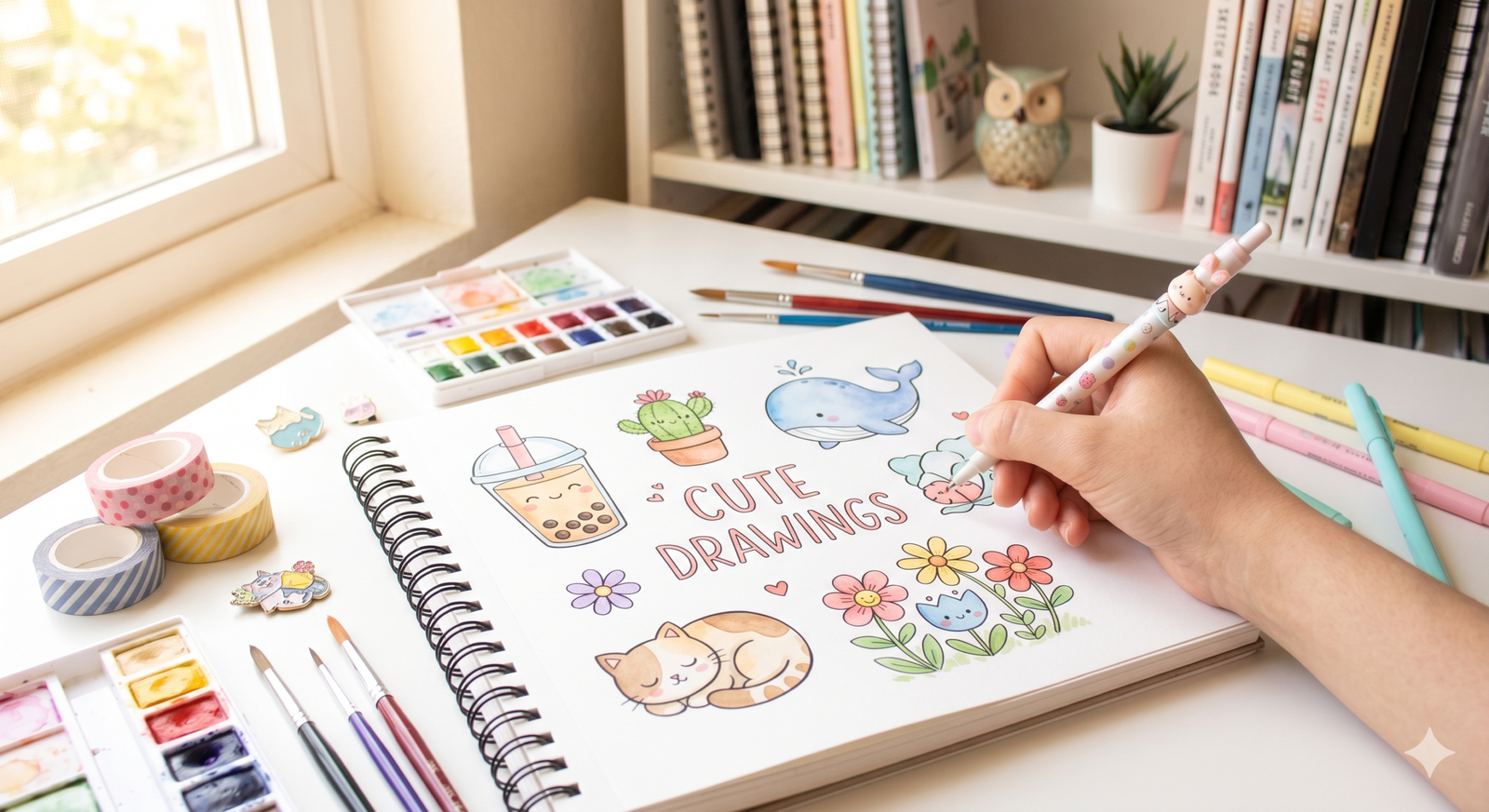
Introduction: The Universal Language of “Aww”
There is a specific kind of magic found in a simple sketch of a cat with oversized eyes or a blushing piece of toast. Cute drawings—often referred to under the umbrella of “Kawaii” culture—have taken the world by storm. They aren’t just for children’s coloring books anymore; they are a massive part of digital communication, branding, and mental wellness for adults and kids alike.
But what makes a drawing “cute”? Is it just about adding a smiley face to an inanimate object, or is there a deeper science behind why our brains light up when we see a tiny, round bird? In this article, we’ll explore the world of adorable art, the psychology behind it, and how you can start creating your own.
The Psychology of Cute: Why Our Brains Love Adorable Art
The obsession with cute drawings isn’t just a trend; it’s hardwired into our biology. Ethologist Konrad Lorenz famously coined the term Kindchenschema (baby schema). This refers to a set of physical features—large heads, high foreheads, big eyes, and chubby cheeks—that trigger a caregiving response in humans.
When we look at cute drawings, our brains release dopamine, the “feel-good” hormone. This is why looking at a gallery of chubby Highland cows or round penguins can actually lower your stress levels. In a fast-paced, often cynical world, cute art acts as a visual reset button, offering a moment of pure, uncomplicated joy.
Key Elements That Make a Drawing “Cute”
If you want to master the art of the “aww,” you need to understand the anatomy of cuteness. It’s less about technical perfection and more about exaggeration and simplification.
1. The Power of the “Oversized”
The golden rule of cute drawings is the ratio of the head to the body. In traditional realism, an adult human is about 7–8 heads tall. In the world of cute art, a character is often only 2 heads tall. Think of Funko Pops or Hello Kitty; the head is massive, and the body is a tiny, soft pedestal.
2. Low-Set Features
To make a character look younger and more vulnerable, place the eyes lower on the face. Instead of putting eyes in the middle of the head, drop them to the bottom third. Keep the nose and mouth close to the eye line. This creates a “baby-faced” look that is instantly endearing.
3. Simplification
Detail is the enemy of cuteness. You don’t need to draw every individual fur strand on a puppy. A simple, rounded outline with two dots for eyes and a tiny “w” for a mouth is often more effective than a hyper-realistic portrait.
4. The “Blush” Factor
Never underestimate the power of two pink ovals. Adding blush marks just under the eyes gives a character an expression of shyness, happiness, or warmth that resonates with the viewer.
Popular Styles of Cute Drawings
The world of cute art is diverse. Depending on your vibe, you might gravitate toward one of these popular styles:
| Style | Characteristics | Origin |
| Kawaii | Bright colors, minimal lines, food with faces. | Japan |
| Chibi | Short, chubby versions of existing characters. | Anime/Manga |
| Doodle Art | Whimsical, hand-drawn feel, often black and white. | Global |
| Cottagecore | Soft watercolors, frogs, mushrooms, and snails. | Internet Subculture |
How to Start Creating Your Own Cute Drawings
You don’t need an expensive tablet or years of art school to start. In fact, some of the most iconic cute characters were born on the back of a napkin.
Step 1: Start with Basic Shapes
Everything in nature can be broken down into circles, ovals, and squares. To draw a cute bee, start with a fat oval. To draw a cat, start with a large circle for the head and a smaller bean shape for the body.
Step 2: The “Dot Eye” Method
If you’re a beginner, don’t worry about drawing realistic irises. Simple black dots are incredibly expressive. By varying the distance between the dots, you can change the character’s personality. Eyes that are far apart look “derpy” and innocent, while eyes close together look focused or curious.
Step 3: Add Personality to Inanimate Objects
This is the most fun part of cute drawing. Take an object—a succulent, a coffee mug, or even a literal rock—and give it a face. This is called anthropomorphism, and it’s the cornerstone of modern cute aesthetics.
Pro Tip: Give your object a tiny accessory. A slice of pizza wearing a top hat is infinitely cuter than a plain slice of pizza.
The Therapeutic Benefits of Doodling
Beyond the aesthetic appeal, creating cute drawings is a form of Art Therapy. Many people use “daily doodles” as a way to manage anxiety. Because the style is inherently “imperfect” and “simple,” the barrier to entry is low. You don’t feel the pressure to create a masterpiece, which allows you to enter a “flow state” more easily.
Coloring in your cute drawings also provides a rhythmic, meditative experience. Choosing soft pastel palettes—mint greens, pale pinks, and lavender—can have a calming effect on your nervous system.
Where to Use Your Cute Art
Once you’ve filled your sketchbook with adorable critters, what do you do with them?
-
Bullet Journaling: Use tiny doodles to track your mood or habits.
-
Custom Stickers: Digital artists often turn their cute drawings into stickers for apps like GoodNotes or for physical sale on platforms like Etsy.
-
Handmade Cards: A hand-drawn cute animal on a birthday card is far more meaningful than a store-bought one.
-
Social Media: Cute art is highly “shareable.” If you’re looking to grow an art account, “kawaii” content often performs exceptionally well because it appeals to all age groups.
Conclusion: Keep it Simple, Keep it Sweet
The world of cute drawings is an invitation to look at the world through a softer lens. It reminds us that there is beauty in simplicity and joy in the “unnecessary” little details—like a bear wearing a tiny sweater or a cloud that’s smiling.
Whether you are a professional illustrator or someone who hasn’t picked up a pencil since grade school, drawing something cute is a guaranteed way to brighten your day. So, grab a pen, draw a circle, add two dots, and see where your imagination takes you.
read also : Google Docs Login: The Ultimate Guide to Cloud Productivity & Collaboration
Why do I feel the urge to doodle “cute” things when I’m stressed?
Doodling is a form of “creative mindfulness.” When you draw soft, rounded shapes and cute characters, you are engaging the brain’s reward system. The rhythmic motion of sketching, combined with the “hit” of dopamine from creating something adorable, lowers cortisol (the stress hormone) and helps your brain enter a “flow state,” effectively acting as a mental reset.
What are the essential “rules” for making a drawing look cute?
The “Golden Rules of Cuteness” usually involve:
The 1:1 Ratio: The head should be as large as, or larger than, the body.
Low-Set Eyes: Place the eyes below the horizontal midline of the face to emphasize a high, “wise” forehead.
Rounded Edges: Avoid sharp angles. Use ovals, circles, and “squishy” lines to evoke safety and softness.
Minimalism: Sometimes, just two dots for eyes and no nose at all is the cutest look!
Is there a difference between “Kawaii” and general cute drawings?
Yes. While “cute” is a broad term, Kawaii is a specific cultural aesthetic from Japan that often emphasizes vulnerability and personality. Kawaii characters often have “flaws”—they might be shy, clumsy, or lazy (like the famous egg, Gudetama). This makes them more relatable and creates a deeper emotional bond than a character that is simply “pretty.”
Why are “hand-drawn” imperfections popular in 2026 digital art?
In an era where AI can generate “perfect” art, we are seeing a massive shift toward the “Human Premium.” Wobbly lines, slightly uneven eyes, and visible “pencil” textures remind the viewer that a human was behind the work. These imperfections make the drawing feel more authentic, sincere, and “cuddly” compared to sterile, perfect vectors.
Can cute drawings actually be used in a professional environment?
Absolutely. Many modern brands use “cute” illustrations to appear more approachable and empathetic. In 2026, we see tech startups and even healthcare apps using adorable icons to explain complex or scary information. It breaks down barriers, reduces user anxiety, and makes a brand feel more like a “wise friend” than a corporate entity.
