


Decoding the Skies: A Comprehensive Guide to Weather Radar
Have you ever looked up at a dark, menacing sky and wondered exactly when the rain would start? Or perhaps you have planned a perfect weekend getaway, only to be constantly refreshing a meteorological app on your phone to track an incoming storm.
At the heart of that life-saving, day-saving technology is the modern weather radar. This incredible tool has transformed how we understand meteorology, turning unpredictable skies into highly readable, digital maps.
Whether you are a daily commuter, an aviation expert, or just someone who wants to keep their weekend picnic dry, understanding how a weather radar operates can give you a fascinating edge. In this comprehensive guide, we will explore the science, the history, and the future of atmospheric tracking.
What Is Weather Radar and How Does It Work?
To truly appreciate the complex and colorful maps we see on our local evening news, we first need to define the core concept behind the technology.
A weather radar, which stands for Radio Detection and Ranging, is an advanced instrument specifically designed to detect precipitation, calculate its motion, and estimate its type. It works by sending out targeted, powerful pulses of electromagnetic energy into the atmosphere.
When these invisible energy pulses hit physical objects like raindrops, snowflakes, or hailstones, a portion of that energy is scattered and bounced back to the radar dish. By measuring the exact time it takes for the echo to return, meteorologists can determine exactly how far away the storm system is located.
The overall strength of the returning signal also tells scientists how intense the precipitation is at that very moment. This constant, looping cycle of transmitting energy and listening for echoes is what creates the vibrant, moving images you see during a local forecast.
The Role of the Doppler Effect
You might have heard television meteorologists frequently talk about Doppler systems during a severe storm broadcast. This is a crucial, modern upgrade to the classic weather radar that allows us to not only see where the rain is falling but also determine how fast it is moving.
The Doppler effect is the exact same physical principle that causes a speeding police siren to change pitch as the car zooms past your location. In meteorological terms, when precipitation particles move toward the radar dish, the frequency of the returning radio waves increases.
Conversely, when those storm particles move away from the dish, the wave frequency decreases. By calculating these subtle, microscopic frequency shifts, a Doppler weather radar can accurately map out the internal wind speeds of a violent storm.
This specific capability is absolutely vital for detecting the telltale rotation of developing tornadoes before they even have a chance to touch the ground. For further reading on atmospheric physics, you can explore resources from the [National Weather Service (NWS) – External Link].
The Evolution of Weather Radar Technology
The fascinating journey of tracking severe storms is deeply rooted in mid-20th-century history and military innovation. During the height of World War II, military radar operators began to notice that certain frustrating “noise” on their surveillance screens was actually being caused by heavy rain and snow showers.
After the war concluded, brilliant scientists realized they could repurpose this military technology specifically for dedicated meteorological observation. Early iterations of the weather radar were quite basic and rudimentary, offering only a vague, blurry outline of where heavy precipitation was currently falling.
However, as computer processing power advanced rapidly in the late 20th century, so did our atmospheric tracking capabilities. The deployment of the NEXRAD (Next-Generation Radar) network in the United States marked a massive, historical leap forward, providing high-resolution, nationwide coverage.
Today, expert meteorologists rely on heavily upgraded, digital systems to issue advanced warnings that save thousands of lives every single year. You can learn more about storm tracking history in our [History of Meteorology Guide – Internal Link].
The Dual-Polarization Revolution
One of the absolute most significant modern advancements in atmospheric tracking is the advent of dual-polarization technology. Older systems only sent out horizontal pulses of energy, which meant they essentially saw a very limited, two-dimensional slice of the rain or snow.
A modern dual-polarization weather radar changes the game by transmitting both horizontal and vertical pulses of energy simultaneously. This incredible feature allows the computer system to measure the actual, physical shape and size of the falling atmospheric particles.
Why does this specific measurement matter so much to forecasters? Because heavy raindrops naturally flatten out like hamburger buns as they fall, while destructive hailstones remain relatively round and jagged.
By analyzing the complex 3D shape of the atmospheric echoes, the weather radar can easily distinguish between light rain, heavy snow, massive hail, and even non-meteorological tornado debris floating in the air. This unprecedented level of detail has drastically reduced false alarms and vastly improved daily forecasting accuracy.
Why Weather Radar is Essential for Public Safety
When severe, life-threatening conditions strike a community, every single second of warning time absolutely counts. The primary, driving mission of any national meteorological organization is to protect human life and property.
The weather radar acts as the ultimate frontline defender in this critical safety mission. Without these massive, spinning dishes, giving the public advanced warning for sudden, violent events like flash floods or destructive microbursts would be nearly impossible.
By continuously and tirelessly scanning the horizon, expert meteorologists can track the exact, minute-by-minute trajectory of a rotating supercell thunderstorm. If they detect tight, dangerous rotation using Doppler capabilities, they can issue a life-saving tornado warning up to twenty minutes before the funnel cloud even forms.
This highly critical lead time allows terrified families to seek underground shelter, local schools to implement lockdown procedures, and emergency medical services to stage and prepare for the storm’s aftermath.
Impact on Aviation and Transportation
The incredible benefits of tracking storms extend far beyond protecting residential neighborhoods and city centers. The massive global aviation industry relies heavily on hyper-accurate weather radar data to keep millions of frequent flyers and pilots safe every single day.
Commercial aircraft simply cannot safely fly through intense, towering thunderstorms due to the extreme atmospheric turbulence, heavy wing icing, and massive hail found inside these dangerous clouds.
Air traffic controllers utilize sophisticated ground-based tracking systems to strategically route passenger planes safely around dangerous, developing cells. Furthermore, many modern commercial aircraft are equipped with their own miniaturized onboard weather radar systems housed inside the nose of the plane.
This allows pilots to make real-time, split-second navigational decisions while cruising at high altitudes, ensuring a smooth, bump-free, and safe journey for everyone on board the flight. Check out our post on [Aviation Weather Safety – Internal Link] to dive deeper into this topic.
How to Read a Weather Radar Map Like a Pro
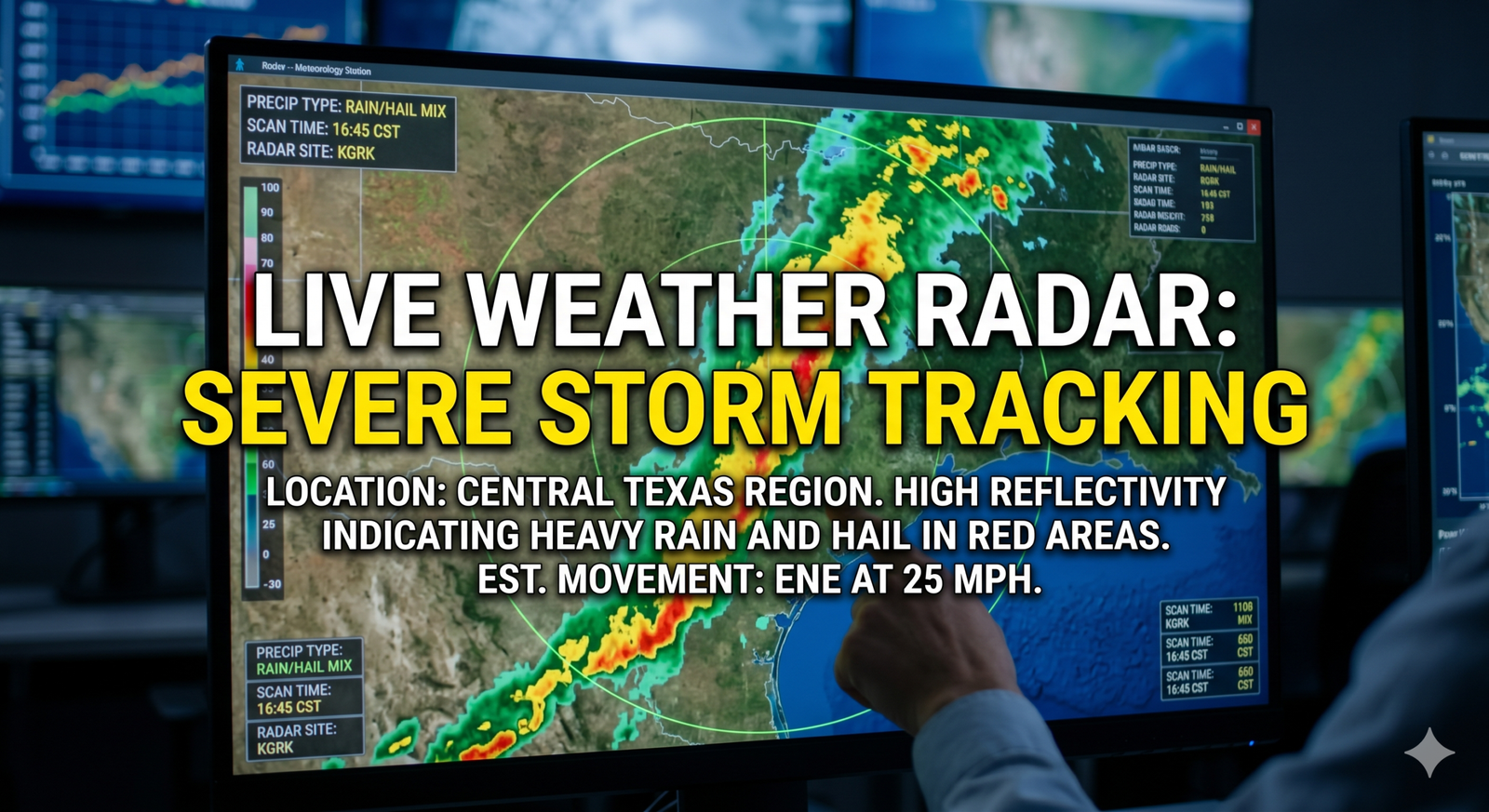
You certainly do not need an advanced university degree in atmospheric science to understand the colorful, moving maps on your favorite mobile weather app. Learning to properly read a weather radar map simply requires knowing what the different visual colors represent.
The vast majority of these digital maps use a standardized color scale to indicate the exact intensity of the falling precipitation. Light greens and cool blues typically represent very light rain, gentle drizzle, or flurries.
As the precipitation inevitably gets heavier, the map colors rapidly transition into bright yellow and harsh orange. When you see vibrant, dark reds and deep purples on your screen, you are looking at intense downpours, severe thunderstorms, and potentially large, damaging hail.
It is also highly important to always look at the animation loop rather than just glancing at a static, frozen image. Watching the animated loop helps you completely understand the forward speed and precise directional track of the incoming storm system.
Understanding Common Radar Limitations
Despite being a true marvel of modern engineering and science, no technological system on Earth is completely flawless. It is critically important to understand the known limitations of your local weather radar to avoid being caught completely off guard by a sudden storm.
One major, common issue that forecasters face is called beam blockage. Because the energy pulses travel in relatively straight lines, tall, dense obstacles like towering mountains, dense skyscrapers, or even nearby municipal water towers can physically block the signal.
This blockage naturally creates frustrating blind spots on the meteorological map where data is missing. Additionally, because the Earth is fundamentally curved, a straight beam naturally gets higher off the ground the further it travels away from the transmission dish.
This physical reality means that a weather radar might completely overpass and miss shallow, low-hanging drizzle or light snow showers that are happening dozens of miles away. Meteorologists expertly overcome these blind spots by cross-referencing their digital data with high-altitude satellite imagery and reports from [weather spotters on the ground – External Link].
The Future of Weather Radar Systems
The fast-paced world of scientific meteorology is never standing still, and the next generation of atmospheric tracking technology promises to be truly groundbreaking for public safety. Researchers are currently heavily testing phased array weather radar systems, which borrow advanced tracking technology directly from the military and naval sectors.
Traditional tracking dishes must mechanically rotate in a full circle and physically tilt upward to scan the entire sky, which can take up to five or six agonizing minutes to complete. Phased array systems, however, have absolutely no moving mechanical parts.
They use hundreds of small, stationary digital antennas to steer the scanning beam electronically in a fraction of a second. This incredible technological leap means they can fully scan a massive, developing supercell thunderstorm in under a single minute.
When eventually combined with advanced artificial intelligence and complex machine learning algorithms, the weather radar of the future will be able to accurately predict extreme, localized events with pinpoint precision, delivering unprecedented safety warnings to highly vulnerable communities.
Conclusion
From its surprisingly humble beginnings in military surveillance to its current, vital status as a cornerstone of modern daily life, atmospheric tracking technology is undeniably remarkable. We have rapidly moved from blurry, confusing green screens to high-definition, three-dimensional digital models of the atmosphere.
By continuously and flawlessly monitoring the unpredictable sky, a modern weather radar keeps our local communities safe, helps massive global industries run smoothly, and allows everyday people to plan their daily lives with total confidence.
As incredible technology like phased array scanning systems and artificial intelligence continues to mature, our daily forecasting capabilities will only become faster and significantly more precise. The next time you casually check your phone to see if you need to grab an umbrella, take a brief moment to truly appreciate the incredible science of the weather radar working tirelessly behind the scenes to keep you dry.
Visit also : Trendlymora.com
What is the main purpose of a weather radar?
The primary purpose of this technology is to accurately locate precipitation, mathematically calculate its forward motion, and determine its specific type and intensity. This highly valuable data allows trained meteorologists to rapidly track violent storms, issue severe public safety warnings, and provide highly accurate daily forecasts to keep the general public safe and well-informed.
How far can a weather radar effectively see?
Most standard, modern operational systems can effectively detect falling precipitation up to about 150 to 200 miles away from the transmission dish. However, because the Earth is physically curved, the tracking beam gets significantly higher in the atmosphere at longer distances, meaning it might completely miss low-level rain or snow far away from the local station.
Can a weather radar accurately predict the exact future?
While it cannot magically see into the future, it constantly tracks current, real-time atmospheric conditions. Expert meteorologists use this highly accurate current data, seamlessly combined with incredibly advanced computer prediction models, to precisely forecast exactly where a storm will be located in the next few hours with remarkable, life-saving precision.
Why does the weather radar sometimes show rain when it is completely dry outside?
This confusing phenomenon is scientifically called virga. It happens when the tracking beam successfully detects heavy rain or snow falling high up in the clouds, but the ambient air near the ground level is so incredibly dry that the precipitation completely evaporates before it ever actually reaches the surface of the earth.
What is the main difference between a satellite and a weather radar?
Satellites orbit incredibly high above the Earth in outer space and take wide, overarching pictures of general cloud cover, showing massive, global atmospheric patterns. Conversely, ground-based tracking stations bounce radio waves directly off of localized precipitation, showing citizens exactly where heavy rain, snow, or destructive hail is actively falling in their immediate neighborhoods.
