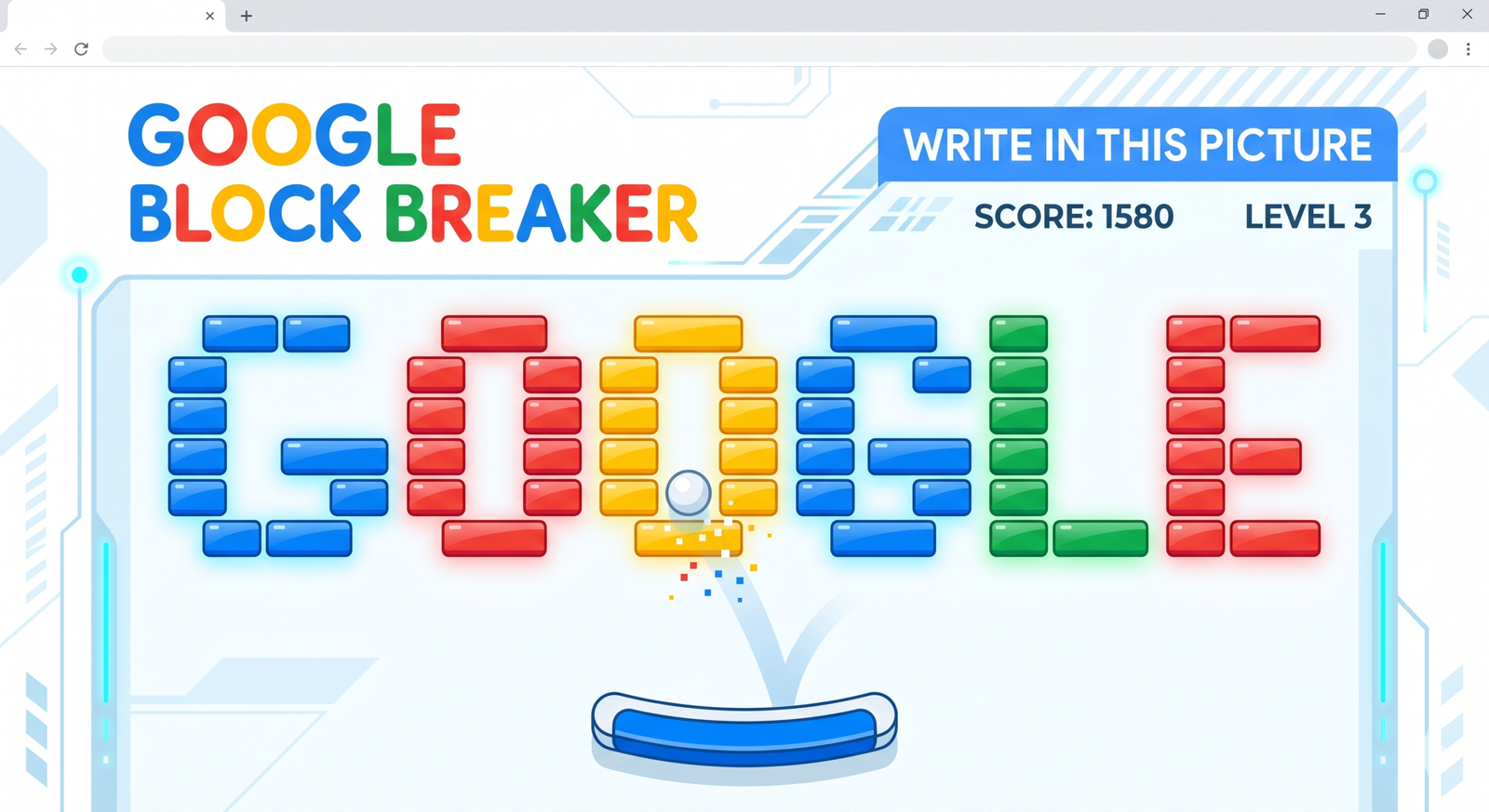
The Ultimate Guide to the Google Block Breaker: History & How to Play
The Ultimate Guide to the Google Block Breaker Experience
Have you ever searched for something online and unexpectedly stumbled into a piece of digital history? That is exactly what happened to millions of internet users who discovered the classic google block breaker hidden right inside their search engine. This delightful interactive secret transformed a mundane image search into a vibrant, nostalgic arcade experience.
For those who might not know, the google block breaker is a digital homage to the legendary 1976 arcade game, Atari Breakout. By seamlessly blending modern web technology with retro gaming magic, developers created a worldwide phenomenon. This hidden gem kept office workers, students, and casual browsers endlessly entertained during their daily web surfing routines.
In this comprehensive guide, we will dive deep into the rich history of the google block breaker, exploring how it was created and why it captured the internet’s heart. We will also explore the fascinating origins of the original arcade cabinet that inspired it, including the famous tech pioneers who built it.
Whether you are a seasoned gamer seeking high-score strategies or a curious web user wanting to uncover hidden browser secrets, this article has everything you need. Let us embark on a journey through the colorful, brick-smashing world of the google block breaker.
The Origins of the Google Block Breaker
To truly appreciate the google block breaker, we must travel back to the golden age of arcade gaming in the 1970s. The concept was initially born from the minds of Nolan Bushnell and Steve Bristow at Atari. They wanted to create a single-player version of their massive hit, Pong.
They enlisted the help of a young Steve Jobs, who in turn brought in his friend Steve Wozniak to engineer the circuit board. This iconic collaboration resulted in Breakout, a game that would go on to define an entire genre of paddle-and-ball mechanics. Decades later, the spirit of that very machine would be reborn as the google block breaker.
When the thirty-seventh anniversary of Atari Breakout approached in 2013, engineers at the world’s most popular search engine decided to celebrate. They wanted to build a tribute that was instantly accessible to anyone with an internet connection. This ambitious project eventually became the google block breaker that we know and love.
How the Easter Egg Was Born
The development team utilized the image search functionality to create a visually striking entrance for the game. When users typed the magic phrase into the search bar, the resulting image thumbnails would suddenly shrink and arrange themselves into rows of colorful bricks. A small paddle and ball would then appear at the bottom of the screen.
This dramatic visual transition was a masterclass in web design and user engagement. It turned the google block breaker into a viral sensation almost overnight, as word of the secret spread rapidly across social media platforms. News outlets and tech blogs around the globe began publishing tutorials on how to trigger the hidden arcade mode.
The underlying code relied on HTML5 Canvas, a relatively new web standard at the time. This technology allowed the google block breaker to run smoothly inside the browser without requiring any cumbersome third-party plugins. It was a perfect demonstration of how capable modern web browsers had become.
How to Play the Google Block Breaker Today
Originally, finding the google block breaker was as simple as typing “Atari Breakout” into the image search bar. However, search engines constantly update their interfaces and features, which means many classic Easter eggs are eventually retired from the main site. Thankfully, the internet never truly forgets its favorite hidden treasures.
Today, you can still experience the thrill of the google block breaker by visiting specialized archive websites. The most popular of these is elgooG, a mirror site dedicated to preserving retired search engine Easter eggs. By navigating to their dedicated games section, you can launch the classic brick-smashing experience instantly.
Once you have loaded the google block breaker on a mirror site, the gameplay remains exactly as it was during its viral peak in 2013. The vibrant rows of images transform into your targets, waiting to be shattered. The familiar bleeps and bloops of the paddle hitting the ball will instantly transport you back to the golden era of arcades.
Mastering the Controls
Playing the google block breaker is incredibly intuitive, making it accessible to gamers and non-gamers alike. If you are playing on a desktop or laptop computer, you can use your mouse to guide the paddle left and right. The paddle tracks your cursor’s movements perfectly, allowing for precise, split-second adjustments.
For those who prefer a more traditional arcade feel, the google block breaker also fully supports keyboard controls. You can use the left and right arrow keys to slide your paddle across the screen. This method is often favored by competitive players who want to eliminate the slight latency that can sometimes occur with a computer mouse.
Mobile users are not left out of the fun, either. The responsive design of the google block breaker allows you to use your smartphone’s touch screen to drag the paddle seamlessly. This touch-friendly interface ensures that you can enjoy a quick session of brick-breaking action during your daily commute or while waiting in line.
Why the Google Block Breaker Remains Popular
In an era dominated by hyper-realistic graphics and sprawling multiplayer universes, it is fascinating that a simple 2D game continues to draw millions of players. The enduring popularity of the google block breaker is a testament to the timeless appeal of well-crafted game mechanics. Striking a ball with a paddle to break blocks is universally satisfying.
Nostalgia plays a massive role in the continued success of the google block breaker. For older generations, it serves as a digital time machine, bringing back fond memories of dropping quarters into glowing arcade cabinets. For younger users, it provides a fascinating, interactive history lesson about the roots of modern video gaming.
Furthermore, the google block breaker serves as an excellent stress reliever during busy workdays. Its straightforward objective allows players to completely detach their minds from complex spreadsheets or difficult coding tasks. Just a few minutes of bouncing a digital ball can clear the mind and significantly improve focus for the rest of the day.
The Psychological Appeal of Retro Gaming
Psychologists often study the phenomenon of casual gaming to understand why humans are so drawn to simple, repetitive tasks. The google block breaker offers an immediate, tangible reward loop that our brains find incredibly stimulating. Every time a block shatters and disappears, our minds release a tiny rush of dopamine.
This immediate feedback loop is exactly why the google block breaker feels so highly addictive. There is no complex storyline to follow and no complicated tutorial to memorize. You are simply given an objective, a tool, and instant visual gratification upon succeeding, which creates a highly engaging and deeply satisfying user experience.
If you are interested in the psychological benefits of short gaming breaks, you can explore external resources like Psychology Today’s insights on casual gaming for deeper analysis. Understanding why we love these games makes playing them feel even more rewarding.
Similar Easter Eggs to the Google Block Breaker
The massive success of the google block breaker encouraged developers to hide even more interactive experiences within our daily browsing tools. One of the most famous examples is the iconic Pac-Man maze, which was initially released to celebrate the character’s thirtieth anniversary. It proved so popular that it caused a measurable drop in global workplace productivity.
Another thrilling example is the infamous Zerg Rush, an Easter egg inspired by the popular strategy game StarCraft. By typing the secret phrase, users would watch as a swarm of colorful digital characters descended upon their search results, attempting to eat the text. Players had to frantically click on the attackers to defend their screen.
Of course, we cannot discuss browser secrets without mentioning the beloved offline Dinosaur Game. Much like the google block breaker, this simple endless runner game transforms moments of frustration into pure entertainment. Whenever an internet connection drops, users are greeted by a pixelated T-Rex jumping over cacti.
The Evolution of Browser Games
All of these hidden gems, including the google block breaker, highlight the incredible evolution of browser-based gaming. In the early days of the internet, playing a game in your browser required bulky, insecure software like Adobe Flash or Java applets. These tools were prone to crashing and often posed significant cybersecurity risks.
Today, thanks to the widespread adoption of HTML5, CSS3, and advanced JavaScript frameworks, games like the google block breaker run natively and securely. Developers can create rich, interactive multimedia experiences without asking users to download a single file. This technological shift has democratized gaming, making it instantly available to billions of people.
If you want to read more about how internet technology has changed over the years, check out our comprehensive history of web development. It provides fantastic context for how far we have come since the early days of the internet.
Strategies for High Scores in the Google Block Breaker
If you want to achieve an impressively high score in the google block breaker, you need more than just fast reflexes. Strategy plays a surprisingly critical role in mastering this vintage-inspired challenge. One of the most effective tactics is to aim the ball toward the outer edges of the brick formation.
By focusing your attacks on the far left or right sides of the google block breaker screen, you can eventually create a narrow vertical tunnel. Once the ball slips through this tunnel and reaches the empty space above the bricks, the real magic happens. The ball will rapidly bounce between the top wall and the upper layer of blocks, accumulating massive points automatically.
This “tunneling” strategy was highly guarded by arcade veterans in the 1970s and remains just as effective in the modern google block breaker. It allows you to clear out massive portions of the screen with minimal effort, all while enjoying the chaotic, rapid-fire sound effects of multiple bricks breaking in quick succession.
Competing with Friends and Colleagues
While the google block breaker is technically a single-player experience, it has sparked countless friendly rivalries in offices and classrooms worldwide. Because the game is so easily accessible, it is simple to challenge a coworker to beat your score during a lunch break. This kind of casual, low-stakes competition is a fantastic way to build team morale.
To keep things interesting, many groups create dedicated chat channels or whiteboards to track the highest google block breaker scores of the week. This gamification of the workplace transforms a simple digital toy into a powerful tool for social bonding. It proves that sometimes the simplest games create the strongest connections between people.
Conclusion: The Legacy of the Google Block Breaker
In conclusion, the google block breaker is much more than a simple string of code hidden within a search engine. It is a beautiful intersection of modern web engineering, internet culture, and rich video game history. By resurrecting a classic arcade cabinet for the digital age, developers created a timeless piece of interactive art.
As we continue to advance toward virtual reality and hyper-realistic digital spaces, it is comforting to know that the simple joy of the google block breaker endures. It reminds us that at the core of all technology, our primary desire is to find moments of joy, connection, and playfulness in our daily lives.
The next time you find yourself staring blankly at a screen, take a moment to seek out the google block breaker online. Take a deep breath, grab your mouse, and lose yourself in the hypnotic rhythm of the bouncing ball. You might just find that this retro gaming relic is exactly what you need to brighten your day.
Read also : Nate Foy Age Details: Bio, Career & Fox News Journey
What exactly is the google block breaker?
The google block breaker is a digital Easter egg designed as a tribute to the classic 1976 Atari Breakout arcade game. It originally transformed image search results into colorful, interactive bricks that players could destroy using a virtual paddle and a bouncing ball. It remains one of the most famous hidden games ever created for a web browser.
Can I still play the google block breaker today?
Yes, you can absolutely still play it today. Although the original Easter egg has been removed from the main, live search engine interface, it has been perfectly preserved on various archive websites. By visiting sites like elgooG, you can instantly launch and play the game exactly as it appeared during its viral release in 2013.
Who created the original game that inspired the google block breaker?
The original arcade game, Breakout, was developed by Atari in the 1970s. The core concept was conceptualized by Atari co-founder Nolan Bushnell and Steve Bristow. The actual engineering and circuit board design were famously completed by Apple co-founders Steve Wozniak and Steve Jobs, making it a highly significant piece of tech computing history.
Are there any strategies to easily win the google block breaker?
A highly effective strategy is to aim the bouncing ball repeatedly at either the far left or far right edges of the brick layout. Doing this eventually carves a narrow tunnel through the blocks. Once your ball passes through this tunnel, it will become trapped above the bricks, rapidly bouncing and destroying multiple targets with zero effort from the player.
Does playing the google block breaker require a fast internet connection?
No, you do not need a fast internet connection to enjoy the game. Because the game utilizes lightweight HTML5 technology rather than heavy video files or complex 3D assets, it loads almost instantly on standard connections. Once the web page has fully loaded, the entire game runs locally within your browser, ensuring a smooth experience without buffering.