



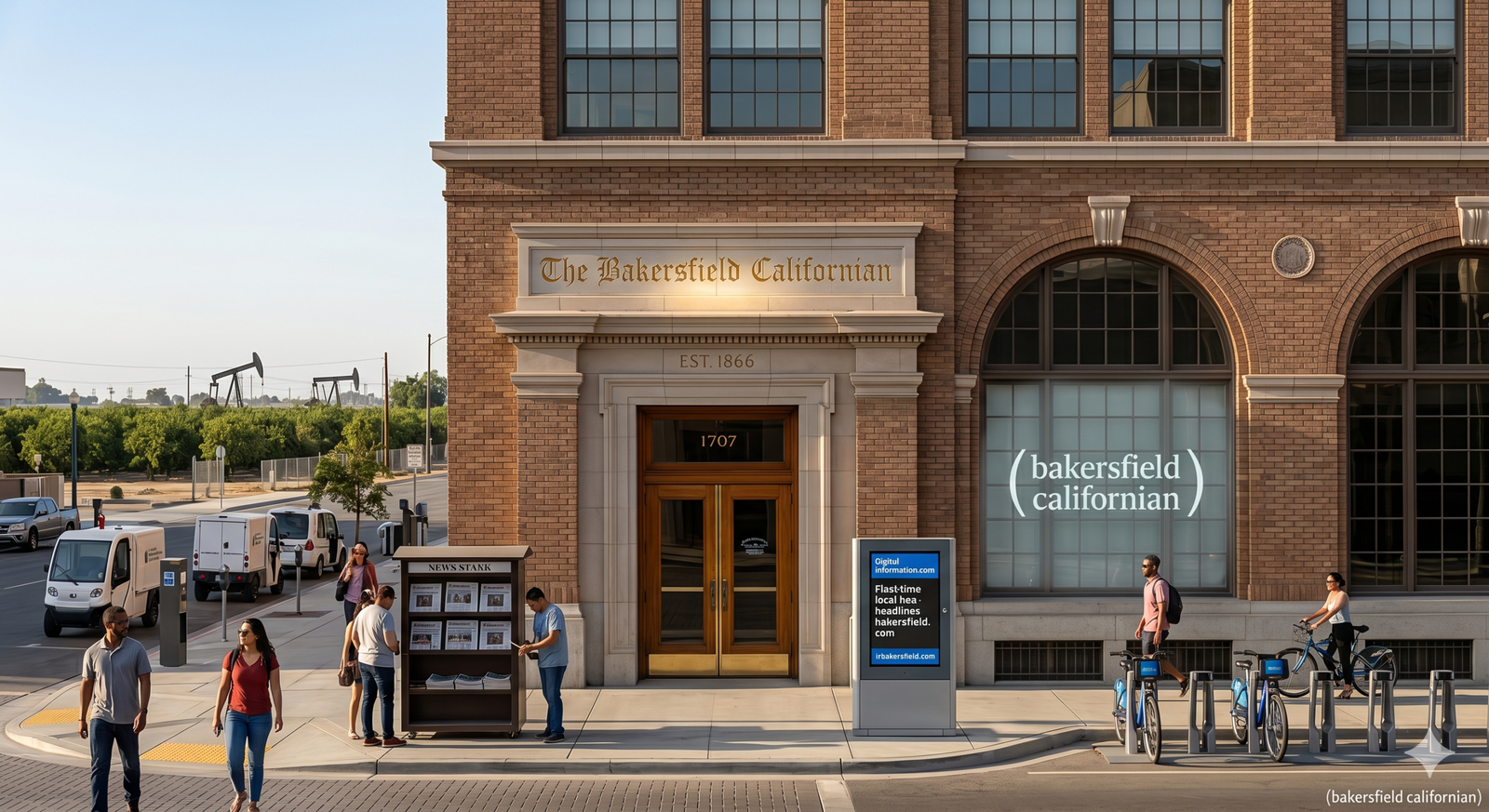
What is the historical significance of The Bakersfield Californian?
The paper’s roots go back to the Kern County Weekly Courier, founded in 1866. It officially became The Bakersfield Californian in 1907. For over a century, it has been the primary record for major local events, including the 1952 Bakersfield earthquake, the rise of the “Bakersfield Sound” in country music, and the evolving labor movements within the valley’s massive agricultural sector.
Is the newspaper still family-owned?
For much of its history, the paper was famously owned by the Bancroft family (starting with Alfred Harrell in 1897). However, in 2019, the paper was sold to Sound News Media, led by Steven Price. This ended over 120 years of local family ownership but was seen as a necessary move to provide the technological investment needed to survive the modern digital media landscape.
How has the paper adapted to the digital age in 2026?
While the printed edition remains a staple for many residents, The Bakersfield Californian has pivoted heavily toward a digital-first strategy. This includes real-time breaking news alerts, investigative podcasts focusing on Central Valley crime and politics, and a robust e-edition. They have also integrated AI-assisted tools to help summarize lengthy city council meetings, allowing their human reporters to focus on deep-dive investigative journalism.
Does the paper still cover the oil and agriculture industries in depth?
Absolutely. Given that Kern County is one of the top oil-producing counties in the U.S. and a global leader in agriculture, the paper maintains dedicated beats for these sectors. In 2026, much of their coverage focuses on the energy transition, detailing how local oil companies are pivotting toward carbon capture and how farmers are navigating California’s increasingly complex water rights and climate challenges.
How can I access archived stories from the early 20th century?
The paper has a partnership with digital archives like Newspapers.com and the Beale Memorial Library. Most editions dating back to the late 1800s have been digitized, allowing researchers and history buffs to search for family genealogy, historical land use, and the cultural evolution of the Southern San Joaquin Valley.
